No Featured Image

New Survey: next lesson on verb tenses

We had a nice TURNOUT (number of visitors) for my last lesson on the past perfect tense, so I thought of preparing another small lesson on verb tenses. For my students, the future perfect and the future perfect progressive tenses can also be challenging, so I’m considering doing one of these next.  What about you?… Read more »

No Featured Image

the past perfect tense

The past perfect can be challenging for some English learners. It can be tough to figure out exactly when or how to use it. But it’s really not very difficult. Basically, the past perfect tense occurs before the past tense and is usually used when you tell a story that happened in the past. When… Read more »

No Featured Image

Survey: next pronunciation lesson

I recently went through our stats here at the small blog; it tells us which posts are getting the most visitors. It turns out that a pronunciation lesson that I posted in February this year for the vowel sound /æ/ (as in cat) is among the most popular. So, now I’m contemplating of preparing another… Read more »

Featured Image

Are you tolerant or judgmental?

Ad on the New York City subway Once in a while, I come across clever ads in subway trains that make me CHUCKLE. This one is from Manhattan Mini Storage (No, I don’t work for them.) It’s STEREOTYPICAL of New Yorkers. Most of us are indeed TOLERANT of other people’s ideas and beliefs, and we… Read more »

Featured Image

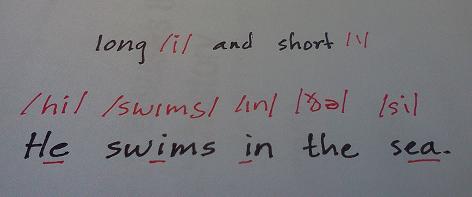
TT4BS /I/ (hit) & /i/ (heat)

Hello, folks! In this TongueTwisting4BetterSpeech, we will practice both the short vowel sound /I/ and the long vowel sound /i/. It’s always good to practice the sounds separately especially if it’s a bit challenging, so you can go to our April 3, 2012 post to practice /I/ and to our April 10, 2012 post for /i/.If you’re… Read more »

No Featured Image

New exercise at the small guide site

Our story continues with our newest exercise at the small guide site. Our main characters, John and Kate, are back from their quick jaunt (short trip) to Chicago. Click the TryThis! link above and head over to the small guide site to read about how their trip went. Try the new exercise and practice the following… Read more »

No Featured Image

Lie vs lay

The English verbs lie and lay are tricky and are often confused even by native speakers. I hope this blog post will clear up this confusion for you, and perhaps you can bookmark this page so you can return to it and brush up on the rules if you forget them. The first thing to… Read more »

No Featured Image

Making it to somewhere

The expression making it to somewhere means being able to get to or arrive somewhere. Let’s take a look at the following examples.1. Did you make it to the party? 2. The manager says if she doesn’t start making it to work on time, they might have to let her go.3. They never made it… Read more »

No Featured Image

psyched (adj)

Psyched is a slang (very informal) word that means excited or ecstatic. Basically, you can be psyched to do something, be psyched about something, or you can just be psyched. Let’s take a look at these examples:1. I’m so psyched about the long weekend coming up. 2. Tom’s psyched that this girl at work that… Read more »

No Featured Image

calling someone’s bluff

To bluff means to deceive or to lie. When you tell someone he’s bluffing, you’re saying you don’t believe what he’s saying. Similarly, when you call someone’s bluff, you’re exposing the person’s lie or deception, and you’re basically telling the person that you know he’s lying. This could also involve making the person prove that what… Read more »